Jiang Xueqin’s Warning: The 3 Targets Israel Is Most Worried About
A deep-dive into the geopolitical flashpoints shaping 2026. Expert analysis meets interactive tools — understand what’s at stake and how to stay ahead of the curve.
Calculate Your 2026 TimelineThe Strategic Context Behind Jiang Xueqin’s Warning
As we navigate the first quarter of 2026, the geopolitical landscape of the Middle East continues to shift at an unprecedented pace. Jiang Xueqin, a widely followed analyst known for his incisive commentary on global power dynamics, has issued a pointed warning about the three strategic targets that dominate Israel’s security calculus.
This isn’t speculative commentary. Jiang Xueqin’s analysis synthesizes open-source intelligence, historical patterns of military engagement, and the evolving architecture of regional alliances. The result is a framework that helps informed observers understand not just what Israel fears, but why these particular threats have converged now.
The timing is significant. With US foreign policy recalibrating after the 2024 elections, Gulf state alliances in flux, and Iran’s nuclear timeline advancing, the pressure points Jiang Xueqin identifies aren’t abstract — they’re shaping policy decisions happening in real time.
The 3 Targets Israel Is Most Worried About
According to Jiang Xueqin’s detailed analysis, three distinct but interconnected threats form the core of Israel’s strategic anxiety heading into 2026.
Iran’s Nuclear Threshold Capability
Iran’s enrichment program has reached a critical inflection point. Jiang Xueqin argues that the gap between “threshold capability” and “weaponization” is narrower than public discourse suggests. Israel’s intelligence apparatus is tracking not just centrifuge capacity but the broader ecosystem of delivery systems, warhead miniaturization research, and the diplomatic cover provided by stalled negotiations. The fear isn’t just a nuclear Iran — it’s the cascade of proliferation it would trigger across the region.
Hezbollah’s Precision Missile Arsenal
While Hezbollah has long maintained a rocket threat, Jiang Xueqin highlights a qualitative shift: the conversion of unguided rockets into GPS-guided precision munitions. This transforms Hezbollah from a nuisance into an existential-level threat capable of striking critical infrastructure — power stations, water desalination plants, and military command centers — with surgical accuracy. Israel’s multi-layered air defense, while formidable, faces saturation scenarios that keep military planners awake at night.
Syria’s Fragmented Non-State Actor Landscape
The third target is less a single entity and more an ecosystem. Syria’s civil war aftermath has created a patchwork of armed groups, some aligned with Iran, others operating semi-autonomously. Jiang Xueqin points to the growing sophistication of drone operations, the entrenchment of IRGC-affiliated militias near the Golan Heights, and the logistical corridors that connect Tehran to the Mediterranean. For Israel, Syria isn’t a country — it’s a theater of distributed threats with no single address to strike.
Interactive 2026 Timeline Calculator
Two tools to contextualize this moment in time. Zero data collected — everything runs locally.
Preparing for 2026: 5 Actionable Steps
Geopolitical awareness isn’t about anxiety — it’s about agency. Here are five concrete steps informed by Jiang Xueqin’s analytical framework to help you navigate uncertainty with clarity.
Diversify Your Information Diet
Move beyond headlines. Follow primary-source analysts, read translated regional press, and cross-reference claims across at least three credible outlets before forming conclusions.
Build Financial Shock Absorbers
Geopolitical disruptions ripple through energy markets and supply chains. Maintain a liquid emergency buffer, reduce single-sector exposure in investments, and understand how oil price volatility affects your daily costs.
Map Your Supply Chain Dependencies
Whether you run a business or manage a household, identify which essentials travel through conflict-adjacent trade routes. Having 30-day buffers of critical items isn’t paranoia — it’s prudence.
Develop Digital Literacy Against Misinformation
Geopolitical crises generate information warfare. Learn to verify images with reverse search tools, recognize bot-amplified narratives, and distinguish analysis from propaganda.
Engage With Analytical Frameworks, Not Just News
Understanding why events happen matters more than knowing what happened. Follow structured geopolitical thinkers like Jiang Xueqin who provide models, not just commentary.
Video Analysis: Watch the Full Breakdown
For a comprehensive walkthrough of Jiang Xueqin’s analysis including visual aids and supplementary context, watch the full video below.
Explore More Insights
Continue your deep-dive with curated analysis from Aesthetic Life.
Frequently Asked Questions
Share this:

More for your journey.
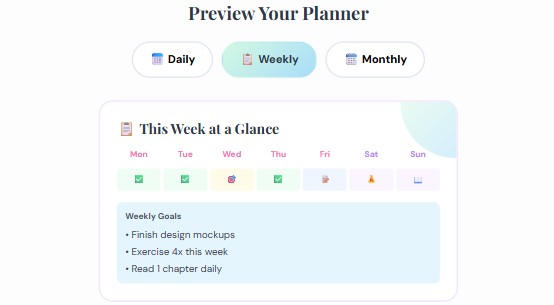
Aesthetic Digital Planner | Daily, Weekly & Monthly Planner
Aesthetic Digital Planner | Daily, Weekly & Monthly Planner Stay beautifully organized with a cute kawaii digital planner that makes productivity feel…
Read story
How to Prepare for 2026: A Practical Timeline for Career, Money, AI, Health, and Personal Growth
2026 is closer than it feels. This practical guide helps you prepare your career, finances, health, skills, and mindset with a simple timeline and an interactive…
Read story
How Many Generals Did Trump Fire? The Complete Timeline
How Many Generals Did Trump Fire? Full Timeline & 2026 Analysis March 26, 2026 · 12 min read · Military & Politics How Many Generals Did…
Read story