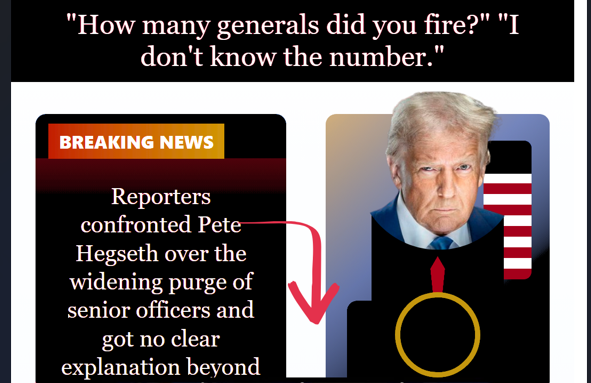
How Many Generals Did Trump Fire? The Complete Timeline & What It Means for 2026
From the Pentagon to the headlines — a definitive accounting of every senior military leader dismissed under the Trump administration, why it matters now, and how to prepare for what comes next.
The Big Picture: How Many Generals?
Across both his first term (2017–2021) and his current second term (2025–present), Donald Trump has fired, forced out, or publicly demanded the resignation of at least 6 senior generals and flag officers, with additional senior Pentagon civilians removed in parallel purges.
This figure includes four-star generals, combatant commanders, and the Chairman of the Joint Chiefs of Staff — making it one of the most significant reshufflings of military leadership in modern American history.
Full Timeline of Dismissals
Below is a chronological record of the most significant military leadership changes under Trump:
Lt. Gen. Michael Flynn — Feb 2017
National Security Advisor forced to resign after just 24 days over undisclosed contacts with Russia’s ambassador. The shortest NSA tenure in history.
Gen. H.R. McMaster — Mar 2018
Replaced as National Security Advisor after persistent clashes with Trump over Iran policy, NATO strategy, and intelligence briefing approaches.
Gen. James Mattis — Dec 2018
Secretary of Defense resigned in protest over Trump’s decision to withdraw troops from Syria, writing a pointed resignation letter citing fundamental disagreements.
Gen. John Kelly — Jan 2019
White House Chief of Staff departed after increasingly contentious relationship with the President over immigration policy and West Wing management.
Gen. Mark Milley — Targeted 2025
Former Chairman of the Joint Chiefs publicly criticized by Trump, who suggested Milley deserved prosecution. Milley’s security detail was revoked upon Trump’s return to office.
Gen. CQ Brown Jr. — Early 2025
Chairman of the Joint Chiefs replaced as part of a sweeping Pentagon leadership overhaul aimed at installing officials aligned with the administration’s defense priorities.
Why Were They Fired?
The dismissals share common threads that reveal broader patterns:
Policy Disagreements
Multiple generals pushed back on decisions regarding Syria withdrawal, NATO commitment levels, and use of military force domestically.
Public Statements
Generals who made public comments perceived as critical of the President became targets for removal or public retaliation.
Loyalty Tests
The administration increasingly prioritized political alignment over institutional military experience in senior appointments.
Impact on Military Readiness
Defense analysts and former officials have raised concerns about the cumulative effect of these leadership changes:
- Institutional knowledge loss — Decades of strategic experience removed from key positions
- Chilling effect — Remaining officers may self-censor professional military advice
- Alliance strain — NATO partners report uncertainty about U.S. military leadership continuity
- Recruitment concerns — Military academy applications have seen shifts following politicization debates
2026 Geopolitical Impact Calculator
Estimate how military leadership changes may affect key areas by 2026 based on historical patterns.
Preparing for 2026: 5 Actionable Tips
Regardless of your political perspective, here’s how to stay informed and resilient:
Diversify Your News Sources
Follow analysis from multiple perspectives — military journals, international outlets, and nonpartisan think tanks provide depth beyond headlines.
Understand Civic Mechanisms
Learn how military appointments, Senate confirmations, and chain of command actually work — informed citizens make better decisions.
Build Financial Resilience
Geopolitical uncertainty affects markets. Maintain emergency savings, diversify investments, and reduce unnecessary debt.
Engage in Constructive Dialogue
Discuss these issues with neighbors, colleagues, and community members — democracy depends on informed public discourse.
Sharpen Your Critical Thinking
Learn to identify misinformation, check sources, and distinguish opinion from reporting — this skill matters more than ever in 2026.
Explore More
Frequently Asked Questions
Share this:

More for your journey.
Aesthetic Digital Planner | Daily, Weekly & Monthly Planner
Aesthetic Digital Planner | Daily, Weekly & Monthly Planner Stay beautifully organized with a cute kawaii digital planner that makes productivity feel…
Read story
How to Prepare for 2026: A Practical Timeline for Career, Money, AI, Health, and Personal Growth
2026 is closer than it feels. This practical guide helps you prepare your career, finances, health, skills, and mindset with a simple timeline and an interactive…
Read story
A new COVID variant nicknamed “Cicada” is being tracked in U.S. states
New COVID Variant "Cicada" Tracked in 25+ U.S. States – What You Need to Know Public Health Update March 26, 2026 · 9 min read A…
Read story